The next chapter of artificial intelligence has a human form.
Why humanoid machines are back in the spotlight, what they can genuinely do today, and where the real engineering work is still happening.
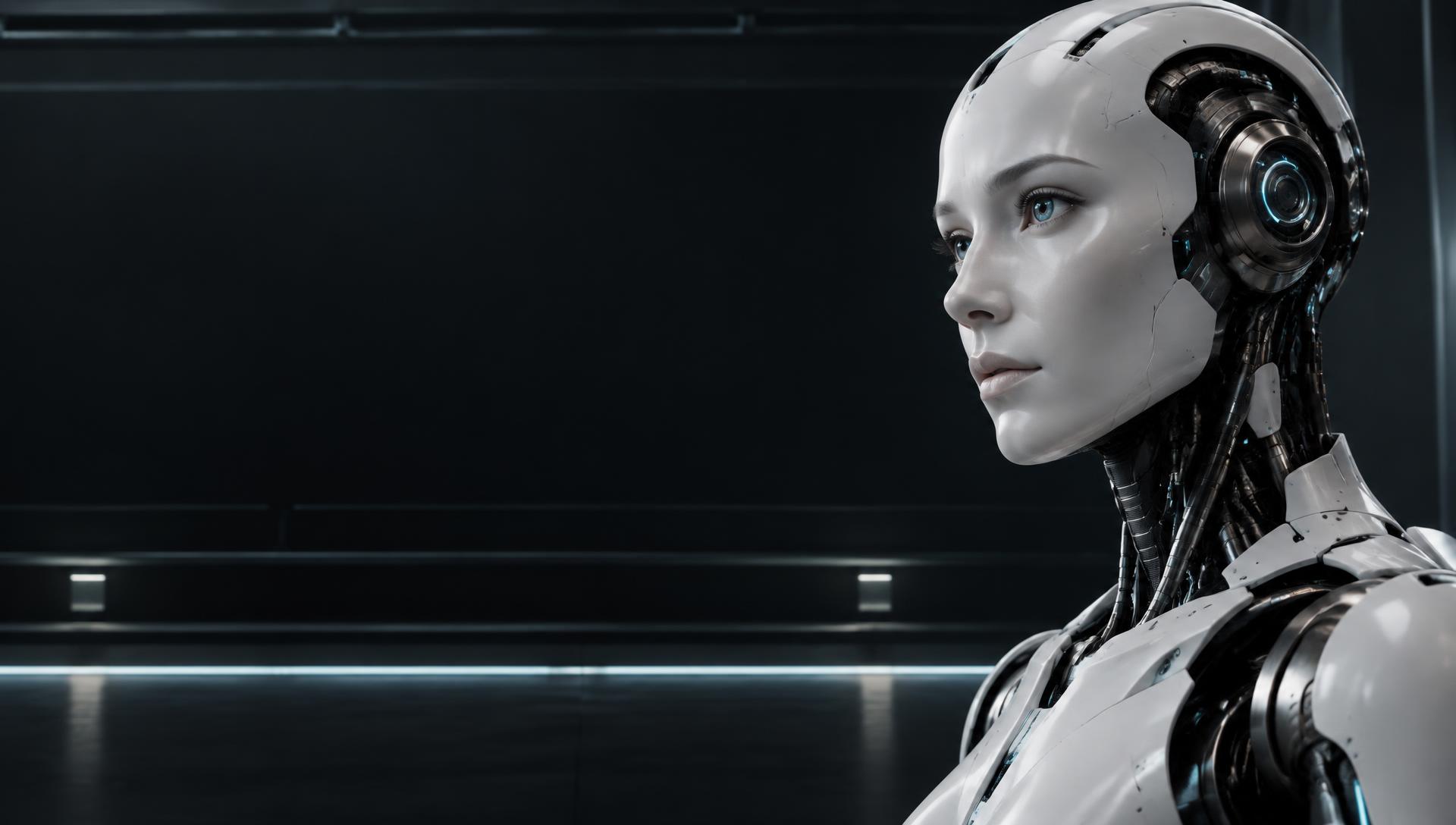
Factories are full of robots that look nothing like us: an arm here, a cart there, a gripper tuned to a single motion repeated millions of times.
And yet the machines capturing attention today have heads, arms, and legs. The reason is not novelty. It is a bet about where these systems will end up working. Understanding that bet, including its limits, tells you a lot about the next chapter of artificial intelligence.
Why humanoids are suddenly everywhere
Humanoid robots have appeared in cycles for decades, usually as demonstrations that impressed in a lab and struggled outside it. What changed is not the shape of the machines. It is what sits behind them.
Modern AI systems can now interpret messy visual scenes, understand spoken instructions, and adapt to situations nobody explicitly programmed. For robotics, that is a turning point: the bottleneck was never motors. It was the software that decides what to do with them.
Once perception and language improved, the idea of a general-purpose machine that operates in human spaces became plausible enough to attract serious funding.
What a humanoid robot can actually do
Today's humanoids can walk, sort objects, load machines, and follow natural-language instructions with varying reliability. These are real capabilities, demonstrated in controlled pilots rather than science fiction.
They are also far from autonomous in the everyday sense. Most current deployments depend on prepared environments, human supervision, or remote operators who step in when something unexpected happens.
The honest summary: impressive demonstrations, limited autonomy, rapid progress.
Why the human form matters, and when it doesn't
A humanoid shape is not an aesthetic preference. Our world was designed for our proportions: stairs, doorways, shelves, tools, vehicles. A machine with that shape can enter that world without rebuilding it first.
That advantage is real but narrow. In a warehouse, a rectangular mobile robot moves boxes better than a two-legged machine. On a production line, fixed robotic arms remain faster, cheaper, and safer.
The human form is a compatibility layer, not a universal upgrade.
The hard problems behind the hardware
Making a robot useful means solving stacked challenges at once: understanding ambiguous instructions, perceiving an unstructured environment, acting safely near people, and recovering from its own mistakes. Each layer multiplies the complexity of the one above it.
Energy is the quiet constraint. A humanoid has to carry its own power supply, which limits how long it can work between charges. That is a constraint specialized machines rarely face.
Advantages and limitations
Weighing humanoids against dedicated machinery comes down to a simple framing:
- Adapts to spaces built for humans, with no need to rebuild facilities around the machine
- One hardware platform can, in principle, learn many different tasks over time
- Can work alongside people in environments designed for people
- Still slower, costlier, and less reliable than specialized machines for most single tasks
- Depends on battery life, supervision, and mature safety practices
What to watch next
The right comparison is not "robot versus specialized machine". It is "which tasks have no dedicated machine at all?" Those are the tasks humanoids will target first, and progress will show up in real deployments, not presentations.
Watch for longer continuous operating times, fewer remote interventions per hour, and pilots that move from controlled demos to messy, real workplaces. Watch the rules, too: a machine that shares physical space with people raises accountability questions no manufacturer can answer alone.
Final thoughts
Humanoid robotics is less about machines that look like us and more about machines that can work anywhere we already do. The next chapter of AI will be judged not by how fluent a system sounds, but by how capable it becomes in the physical world.
The most useful question remains the simplest one: where does this machine genuinely improve someone's work or life? Where it does, the human form will earn its place.
Back to articles